Tuesday, July 8, 2014
10 Companies That Control Almost Everything We Eat
Via Business Insider - Oxfam International has made a graphic showing how a handful of corporations<http://www.bespacific.com/10-companies-control-almost-everything-eat/%20%20http://www.businessinsider.com/10-companies-that-control-what-we-buy-2014-7#ixzz36ogugLEi> control nearly everything we buy at the grocery store. The graphic focuses on 10 of the world's most powerful food and beverage companies: Coca-Cola, PepsiCo, Unilever, Danone, Mars, Mondelez International, Kellogg's, General Mills, Nestle, and Associated British Foods. Oxfam calls these companies the Big 10 and keeps a scorecard on their environmental impact on a website <http://www.behindthebrands.org/en-us> devoted to the nonprofit's "Behind the Brands" campaign. The campaign aims to make the companies more environmentally and socially conscious. According to one of Oxfam's most recent reports<http://www.oxfam.org/sites/www.oxfam.org/files/bp186-standing-sidelines-big10-climate-emissions-200514-en_2.pdf>, the Big 10 emitted 263.7 million tons of greenhouse gas emissions in 2013 and if the companies were a nation, it would be the 25th most polluting country in the world."


Thursday, February 27, 2014
FDA's New Food Labels Highlight Calories, Sugar
U.S. food labels are getting a makeover that aims to reduce the nation's chronic health woes.

People looking to cut back on their calories and sugar intake won’t even have to squint with the new nutritional facts label from the U.S. Food and Drug Administration (FDA).
Unveiled Thursday, the new labels seek to clarify serving sizes, as well as help consumers quickly identify common substances that can contribute to chronic disease, such as obesity, diabetes, and heart disease. The new labels change the identification of serving sizes, added sugars, and key nutrients many Americans are missing.
First Lady Michelle Obama is committed to improving the nation's health, and her staff played an important part in getting the proposal out of the FDA, where the labeling revamp has been in the works for several years.
“Our guiding principle here is very simple: that you as a parent and a consumer should be able to walk into your local grocery store, pick up an item off the shelf, and be able to tell whether it’s good for your family,” Obama said in a statement. “So this is a big deal, and it’s going to make a big difference for families all across this country.”
Changes to the New Nutrition Facts Label
Some changes in the proposed labels include:
- Refresh the format to emphasize certain elements, such as calories, serving sizes, and Percent Daily Value.
- Identify the amount of “added sugars” in food to help reduce the average amount consumed by Americans.
- Update serving size to reflect what people actually eat, namely whole packages of food that could be consumed in one sitting.
- Use the dual-column “per serving” and “per package” labels for larger packages that could be consumed in one sitting or multiple sittings.
- Show levels of potassium and vitamin D, two nutrients many Americans need more of.
- Declarations of vitamins A and C content would no longer be required on the label.
- Revise the daily values for sodium, dietary fiber, and Vitamin D.
- Eliminate the “Calories from Fat” label, because research shows the type of fat is the most important.
Experts Say the Change Is Long Overdue
Chris Ochner, assistant professor of Pediatrics at the Adolescent Health Center at Mount Sinai Hospital, said that the number of calories in food is the most important thing a person should pay attention to, and that the new label’s emphasis on calories and realistic serving sizes are “very sorely needed changes.”
“The expected move toward realistic serving size finally limits the ability for manufacturers to send the impression that individuals were not consuming excess calories, sugar, and saturated fats by listing nutrition facts for serving sizes much smaller than individuals would typically consume,” he said.
Ochner used the example of a 20-ounce bottle of soda as an example. He said that while the soda would typically be consumed in one sitting, the container's label asserts that it contains 2.5 servings.
“Until now, they would only be provided with nutrition information for less than half of what they typically consumed,” he said. “Overall, the expected changes are not only welcome ... it is astounding that it took 20 years to overhaul a system that was notoriously unhelpful for consumers.”
Jaclyn London, senior clinical dietitian at Mount Sinai, called the new user-friendly label “laudable,” but she said the absence of fundamental nutrition education hinders behavior change in the long run.
“Although this is a significant step in consumer education, efforts to inform individuals on general, healthy diet and the importance of consuming fresh foods will remain an ongoing challenge as we move forward with this exciting new development,” she said.
Thursday, February 13, 2014
Silicon Valley's Next Big Goal: Fixing Our Broken Food System
Silicon Valley's Next Big Goal: Fixing Our Broken Food System
A raft of entrepreneurs and venture capitalists made their money in tech, and now want to do something with an even longer-lasting impact
By Jane Black<http://www.fastcompany.com/user/jane-black>
http://www.fastcompany.com/3025602/rebuilding-big-food-aglocal-beyond-meat-brightfarms-farmland-lp-harvest-power
inShare
At ali Partovi's Partovi Porktacular, the assembled tech-and food-world luminaries, dressed in their best jeans, nibble on tortellini stuffed with locally foraged mushrooms in the golden, late-afternoon light while waiting for the main event--a heritage-breed whole pig from Marin Sun Farms--to make the requisite number of turns on a spit to reach the optimal shade of mahogany and crispy-skinned goodness. You can hear the occasional cluck from a chicken coop, strategically placed away from the action. It was just the kind of party at which you might find Michael Pollan<http://www.fastcompany.com/person/michael-pollan>, the best-selling author of The Omnivore's Dilemma and messiah of America's local-food revolution. In fact, Pollan is here, mingling among the likes of Dropbox cofounders Drew Houston and Arash Ferdowsi, Airbnb CTO and cofounder Nate Blecharczyk, and Yelp CEO Jeremy Stoppelman. "Ali occupies a special place between Silicon Valley and the food movement," Pollan says. "He's become an important connector in the Bay Area."
This is not your garden-variety Silicon Valley tale of disruption. Partovi and his peers may embrace the typical food-reformer impulses in their personal lives--spurning processed food spewed from the industrial food complex, and if not making their own cheese and roasting their own coffee, then at least ordering $32 plates of roast chicken at chic farm-to-table restaurants. But as investors, they have no interest in throwing their lot in with Mark Bittman, Chez Panisse founder Alice Waters, and other idealists and moralists who believe local and sustainable food can undercut the industrial system. If only urban yuppies voted with their recycled shopping bags at Whole Foods<http://www.fastcompany.com/3023960/fast-feed/whole-foods-is-dropping-chobani-next-year> and farmers' markets, loading up on artisanal meats and heirloom vegetables, then perhaps small farmers wouldn't be robbed of their livelihoods. If only the food world were simpler, then perhaps we could end Americans' addiction to cheap food laden with salt, sugar, and fat.
[http://c.fastcompany.net/multisite_files/fastcompany/imagecache/inline-sidebar/inline/2014/02/3025602-inline-p-1-2014-most-innovative-companies-aglocal.jpg]
AGLocal is one of the Most Innovative Companies in 2014
Read More >><http://www.fastcompany.com/most-innovative-companies/2014/aglocal>
The Valley's food-tech vanguard rejects this utopianism, choosing instead to embrace solutions that would redesign the systems and processes that have made the food industry a target of such ire. Redesigning is very different from dismantling. "If you were designing America's food and ag system from scratch, you'd never end up with what we have today," Partovi says. But it's what we have, which means it's the starting point. "What I want to figure out is, is there a way to come up with some creative ideas that are a path to the solution?"
[http://c.fastcompany.net/multisite_files/fastcompany/imagecache/inline-sidebar/inline/2014/02/3025602-inline-p-1-2014-most-innovative-companies-beyond-meat.jpg]
Beyond Meat is one of the Most Innovative Companies in 2014
Read More >><http://www.fastcompany.com/most-innovative-companies/2014/beyond-meat>
This new approach acknowledges that we still want cheap and abundant food. And rather than shying away from technology because of the role it played in creating today's problems--for example, synthetic nitrogen fertilizer, made from petroleum, fueled the explosive growth in the production of grains, soybeans, and corn, which in turn were used to make the processed foods that make up so much of the American diet--these new food reformers seek to use it strategically to produce what we want without costs to our environment and our health. That requires more complexity than a network of community gardens can provide.
[http://e.fastcompany.net/multisite_files/fastcompany/imagecache/inline-sidebar/inline/2014/02/3025602-inline-p-1-2014-most-innovative-companies-brightfarms.jpg]
BrightFarms is one of the Most Innovative Companies in 2014
Read More >><http://www.fastcompany.com/most-innovative-companies/2014/brightfarms>
"There really are two kinds of food entrepreneurs," says venture capitalist Paul Matteucci, who encourages and connects food-tech upstarts through his not-for-profit, Feeding 10 Billion. "There are the ones that hang around Berkeley or Brooklyn, and build businesses mostly for the end consumer. Then there is a whole different group of highly technical people who are building robotics for the field, sensor-based technology, automated watering systems, new food-packaging technologies, and big-data-related inventory control to reduce waste." These, he says, are "the people who are going to solve the big problems."
[http://f.fastcompany.net/multisite_files/fastcompany/imagecache/inline-sidebar/inline/2014/02/3025602-inline-p-1-2014-most-innovative-companies-farmland-lp.jpg]
Farmland LP is one of the Most Innovative Companies in 2014
Read More >><http://www.fastcompany.com/most-innovative-companies/2014/farmland-lp>
These challenges have led to significant investment dollars flooding into food-tech companies. Venture capitalists and angel investors put $103 million into agriculture technology between April 2012 and March 2013, a 150% increase from the previous year. They've also put nearly $350 million into food companies, seven times the total invested in 2008. Food businesses "have a different financial profile than dotcoms and software companies," admits Amol Deshpande, a partner at Kleiner Perkins Caufield & Byers<http://www.fastcompany.com/3019060/fast-feed/kleiner-perkins-launches-fellows-program-to-attract-young-product-managers>, who specializes in agriculture technology. "But it's also a business that is not quite as competitive, and it needs tech innovation. You are meeting a real need rather than developing more 'me too' products."
[http://a.fastcompany.net/multisite_files/fastcompany/imagecache/inline-sidebar/inline/2014/02/3025602-inline-p-1-2014-most-innovative-companies-harvest-power.jpg]
Harvest Power is one of the Most Innovative Companies in 2014
Read More >><http://www.fastcompany.com/most-innovative-companies/2014/harvest-power>
In October, Monsanto laid down $930 million in cash for Climate Corp., a firm founded by a pair of former Googlers that offers farmers detailed weather monitoring, prediction, and analysis. Foodies are quick to accuse Monsanto of being the evil empire. But in that move, small farms and farmers' markets will be presented with new ways to be more efficient--without modifying the actual food we eat. And as the first successful exit for the new breed of food-tech startup, it's expected to draw more money, ideas, and energy to the movement.
Although some of the most high-profile food-tech firms are creating alternative foods (and we highlight one of them here), not all of the most innovative solutions are in the meal-replacement business. Rather, they're like Climate Corp., a startup that improves upon our current infrastructure. These are some of the companies connected to Silicon Valley that are making a difference.
What does the food chain look like? We asked Academy Award-nominated filmmaker PES<http://www.eatpes.com/> to imagine it.
A raft of entrepreneurs and venture capitalists made their money in tech, and now want to do something with an even longer-lasting impact
By Jane Black<http://www.fastcompany.com/user/jane-black>
http://www.fastcompany.com/3025602/rebuilding-big-food-aglocal-beyond-meat-brightfarms-farmland-lp-harvest-power
inShare
At ali Partovi's Partovi Porktacular, the assembled tech-and food-world luminaries, dressed in their best jeans, nibble on tortellini stuffed with locally foraged mushrooms in the golden, late-afternoon light while waiting for the main event--a heritage-breed whole pig from Marin Sun Farms--to make the requisite number of turns on a spit to reach the optimal shade of mahogany and crispy-skinned goodness. You can hear the occasional cluck from a chicken coop, strategically placed away from the action. It was just the kind of party at which you might find Michael Pollan<http://www.fastcompany.com/person/michael-pollan>, the best-selling author of The Omnivore's Dilemma and messiah of America's local-food revolution. In fact, Pollan is here, mingling among the likes of Dropbox cofounders Drew Houston and Arash Ferdowsi, Airbnb CTO and cofounder Nate Blecharczyk, and Yelp CEO Jeremy Stoppelman. "Ali occupies a special place between Silicon Valley and the food movement," Pollan says. "He's become an important connector in the Bay Area."
This is not your garden-variety Silicon Valley tale of disruption. Partovi and his peers may embrace the typical food-reformer impulses in their personal lives--spurning processed food spewed from the industrial food complex, and if not making their own cheese and roasting their own coffee, then at least ordering $32 plates of roast chicken at chic farm-to-table restaurants. But as investors, they have no interest in throwing their lot in with Mark Bittman, Chez Panisse founder Alice Waters, and other idealists and moralists who believe local and sustainable food can undercut the industrial system. If only urban yuppies voted with their recycled shopping bags at Whole Foods<http://www.fastcompany.com/3023960/fast-feed/whole-foods-is-dropping-chobani-next-year> and farmers' markets, loading up on artisanal meats and heirloom vegetables, then perhaps small farmers wouldn't be robbed of their livelihoods. If only the food world were simpler, then perhaps we could end Americans' addiction to cheap food laden with salt, sugar, and fat.
[http://c.fastcompany.net/multisite_files/fastcompany/imagecache/inline-sidebar/inline/2014/02/3025602-inline-p-1-2014-most-innovative-companies-aglocal.jpg]

AGLocal is one of the Most Innovative Companies in 2014
Read More >><http://www.fastcompany.com/most-innovative-companies/2014/aglocal>
The Valley's food-tech vanguard rejects this utopianism, choosing instead to embrace solutions that would redesign the systems and processes that have made the food industry a target of such ire. Redesigning is very different from dismantling. "If you were designing America's food and ag system from scratch, you'd never end up with what we have today," Partovi says. But it's what we have, which means it's the starting point. "What I want to figure out is, is there a way to come up with some creative ideas that are a path to the solution?"
[http://c.fastcompany.net/multisite_files/fastcompany/imagecache/inline-sidebar/inline/2014/02/3025602-inline-p-1-2014-most-innovative-companies-beyond-meat.jpg]

Beyond Meat is one of the Most Innovative Companies in 2014
Read More >><http://www.fastcompany.com/most-innovative-companies/2014/beyond-meat>
This new approach acknowledges that we still want cheap and abundant food. And rather than shying away from technology because of the role it played in creating today's problems--for example, synthetic nitrogen fertilizer, made from petroleum, fueled the explosive growth in the production of grains, soybeans, and corn, which in turn were used to make the processed foods that make up so much of the American diet--these new food reformers seek to use it strategically to produce what we want without costs to our environment and our health. That requires more complexity than a network of community gardens can provide.
[http://e.fastcompany.net/multisite_files/fastcompany/imagecache/inline-sidebar/inline/2014/02/3025602-inline-p-1-2014-most-innovative-companies-brightfarms.jpg]

BrightFarms is one of the Most Innovative Companies in 2014
Read More >><http://www.fastcompany.com/most-innovative-companies/2014/brightfarms>
"There really are two kinds of food entrepreneurs," says venture capitalist Paul Matteucci, who encourages and connects food-tech upstarts through his not-for-profit, Feeding 10 Billion. "There are the ones that hang around Berkeley or Brooklyn, and build businesses mostly for the end consumer. Then there is a whole different group of highly technical people who are building robotics for the field, sensor-based technology, automated watering systems, new food-packaging technologies, and big-data-related inventory control to reduce waste." These, he says, are "the people who are going to solve the big problems."
[http://f.fastcompany.net/multisite_files/fastcompany/imagecache/inline-sidebar/inline/2014/02/3025602-inline-p-1-2014-most-innovative-companies-farmland-lp.jpg]

Farmland LP is one of the Most Innovative Companies in 2014
Read More >><http://www.fastcompany.com/most-innovative-companies/2014/farmland-lp>
These challenges have led to significant investment dollars flooding into food-tech companies. Venture capitalists and angel investors put $103 million into agriculture technology between April 2012 and March 2013, a 150% increase from the previous year. They've also put nearly $350 million into food companies, seven times the total invested in 2008. Food businesses "have a different financial profile than dotcoms and software companies," admits Amol Deshpande, a partner at Kleiner Perkins Caufield & Byers<http://www.fastcompany.com/3019060/fast-feed/kleiner-perkins-launches-fellows-program-to-attract-young-product-managers>, who specializes in agriculture technology. "But it's also a business that is not quite as competitive, and it needs tech innovation. You are meeting a real need rather than developing more 'me too' products."
[http://a.fastcompany.net/multisite_files/fastcompany/imagecache/inline-sidebar/inline/2014/02/3025602-inline-p-1-2014-most-innovative-companies-harvest-power.jpg]
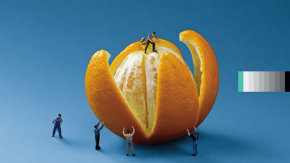
Harvest Power is one of the Most Innovative Companies in 2014
Read More >><http://www.fastcompany.com/most-innovative-companies/2014/harvest-power>
In October, Monsanto laid down $930 million in cash for Climate Corp., a firm founded by a pair of former Googlers that offers farmers detailed weather monitoring, prediction, and analysis. Foodies are quick to accuse Monsanto of being the evil empire. But in that move, small farms and farmers' markets will be presented with new ways to be more efficient--without modifying the actual food we eat. And as the first successful exit for the new breed of food-tech startup, it's expected to draw more money, ideas, and energy to the movement.
Although some of the most high-profile food-tech firms are creating alternative foods (and we highlight one of them here), not all of the most innovative solutions are in the meal-replacement business. Rather, they're like Climate Corp., a startup that improves upon our current infrastructure. These are some of the companies connected to Silicon Valley that are making a difference.
What does the food chain look like? We asked Academy Award-nominated filmmaker PES<http://www.eatpes.com/> to imagine it.
Subscribe to:
Posts (Atom)